Pottery Barn Kids Dupe Desk: Seven Lookalikes and a Build Path
A Pottery Barn Kids dupe desk guide: what gives the catalog kids' desks their look, seven Amazon lookalikes with hutches and drawers, and what building costs.
A Pottery Barn Kids dupe desk is a children’s writing desk that borrows the parts of the catalog originals people actually notice: a painted white or soft gray finish, a hutch with cubbies above the work surface, a drawer or two, and a chair that tucks in neatly. The pieces from the retailer’s kids’ line tend to look like small furniture rather than toys, and that is the whole appeal. This guide explains what creates that look, how to read a listing for a lookalike, and which Amazon options are worth a closer read. It also covers the honest route of building furniture for a child’s room yourself, with a clear note on which of our plans are close and which are only related.
We name Pottery Barn Kids only to describe a style. The desks below are lookalikes, not copies, and each one differs from the original in material, scale or hardware. Where a difference matters, we say so.
What makes a Pottery Barn Kids desk look like Pottery Barn Kids
Four traits carry most of the effect, and they are the traits to match when you shop.
A calm painted finish. The catalog look is matte or satin paint in white, warm gray or a muted blue, applied evenly enough that you do not see brush marks. A glossy finish, or a color that reads as bright plastic, moves a desk toward the toy aisle.
A hutch with open and closed storage. Shelves over the desk surface give a child somewhere to put books and supplies off the work area. The better versions mix two or three open cubbies with a closed door or a fabric bin, so the room does not look cluttered the moment a project begins.
Proportion for the child, not the adult. Children’s desks work when the surface height suits the chair. A desk that is scaled for a ten year old but photographed beside a five year old is a common marketing trick. Check the listed dimensions against the age range, not the photo.
Rounded edges and quiet hardware. Soft corners, simple knobs and a drawer that closes without a bang are small signals of care. They also matter for safety, since children bump into furniture.
How to judge a lookalike before you buy
Read the listing like a spec sheet.
- Material statement. Many kids’ desks are made from engineered wood with a painted or laminate surface. That is not a flaw, but it is a different product than solid wood. Look for the words “solid wood” and a named species if that is what you want, and treat a vague “wood” as engineered board.
- Age range and dimensions. Compare the listed desk height and chair seat height. A good match leaves room for the child’s knees and lets the feet rest on the floor or a footrest.
- Weight capacity of the desktop. Some listings state the load the top can hold. It is a rough indicator of how the board is built.
- Assembly and fasteners. Cam-lock fittings in particleboard are common and workable, but they loosen. Plan to check the screws a few weeks after assembly and again each season.
- Chair included or not. A desk and chair set solves the proportion problem in one purchase. A desk alone needs a separate chair, which adds a decision.
- Returns and the packing. Large flat boxes are easy to damage in shipping. Open the box promptly and check every panel.
Cord management is a quiet feature worth a look if the desk will hold a tablet or lamp. A cutout in the back panel keeps cables off the floor.
Pottery Barn Kids dupe desks on Amazon
The picks below were chosen for a white or neutral finish, a hutch or shelf above the surface, and storage that looks tidy. Descriptions come from the listing titles and features as we read them, so confirm current dimensions and what is included before you decide. Sellers change these details.
BOLUO wooden kids desk with storage, drawer and cabinet
A white desk and chair set with a hutch, a drawer and a cabinet, aimed at roughly eight to ten year olds according to the title. The mix of open shelf and closed cabinet is the closest to the catalog habit of hiding clutter. The difference is the construction: the listing describes a board top rather than the thicker, painted hardwood a premium desk would use, so expect a lighter feel.
Guidecraft Kids Media Desk and Chair Set in white
A white writing desk with a hutch, storage shelves and a cork board for pinning artwork. Guidecraft is a children’s furniture maker, and the cork panel is a practical touch that echoes the pinboards in catalog study nooks. It reads more workstation than heirloom, and the shelf layout is busier than the calmest originals.
Guidecraft Taiga kids desk and chair set with hutch
A related white set from the same maker, with a hutch, drawers and cork. If the first Guidecraft desk feels too large, this one is a useful comparison, because the shelf and drawer arrangement is different. As with all engineered desks in this price class, the finish is the part to inspect on arrival.
UTEX wooden kids desk and chair set with hutch and cork board
A set built for a wide age range, five to twelve according to the title, with a hutch and a cork bulletin board. A wide range usually means the desk is a compromise size, so it suits a child who will grow into it. The look is simple and clean, with less detailing than a designer piece.
UTEX wooden kids desk and chair set with open storage and one drawer
A simpler layout with open storage, a single drawer, a tabletop organizer and solid wood legs, as described in the listing. Solid legs under an engineered top is a common and sensible construction. This is the quietest of the group, which makes it the best match for a room that already has a lot going on.
INFANS kids desk and chair set with storage shelves and drawer
A white desk and chair with storage shelves and a drawer. It leans toward the practical end of the style, and the white finish is the main link to the Pottery Barn Kids look. Check the shelf depth in the listing, since shallow shelves hold fewer books than they appear to in photos.
Costzon kids desk and chair set with drawer
A smaller set for the three to eight range, with a drawer and a student writing surface. It suits a younger child and a smaller room. Because it is scaled down, it will be outgrown sooner than the larger sets, which is worth weighing against its tidy footprint.
Build it instead
We do not sell a children’s desk plan, so no plan here is a direct match for the piece in this guide. Two of our kids’ plans are related builds that share the same approach to child-safe, painted furniture, and they show whether building suits you.
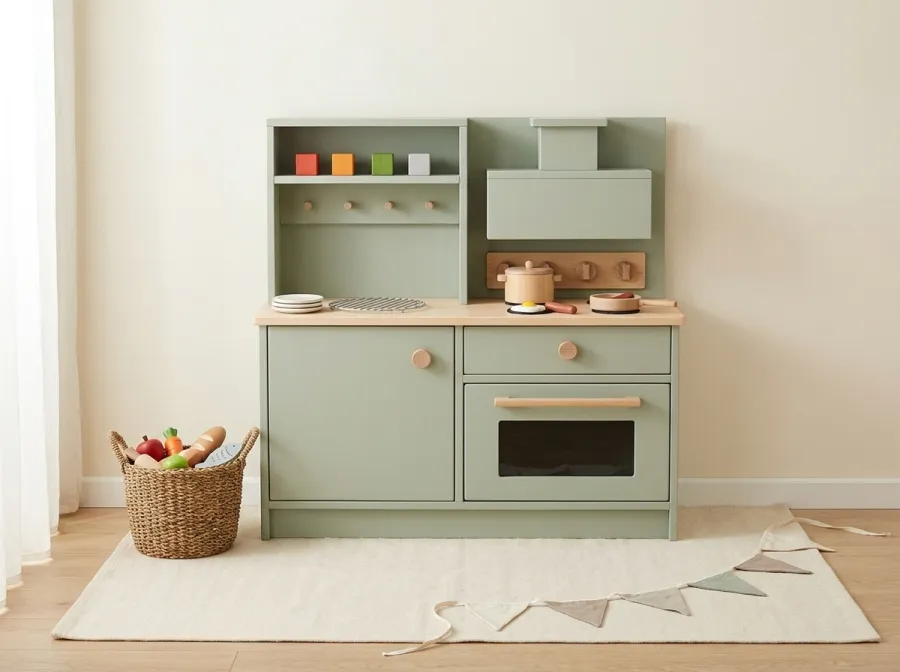
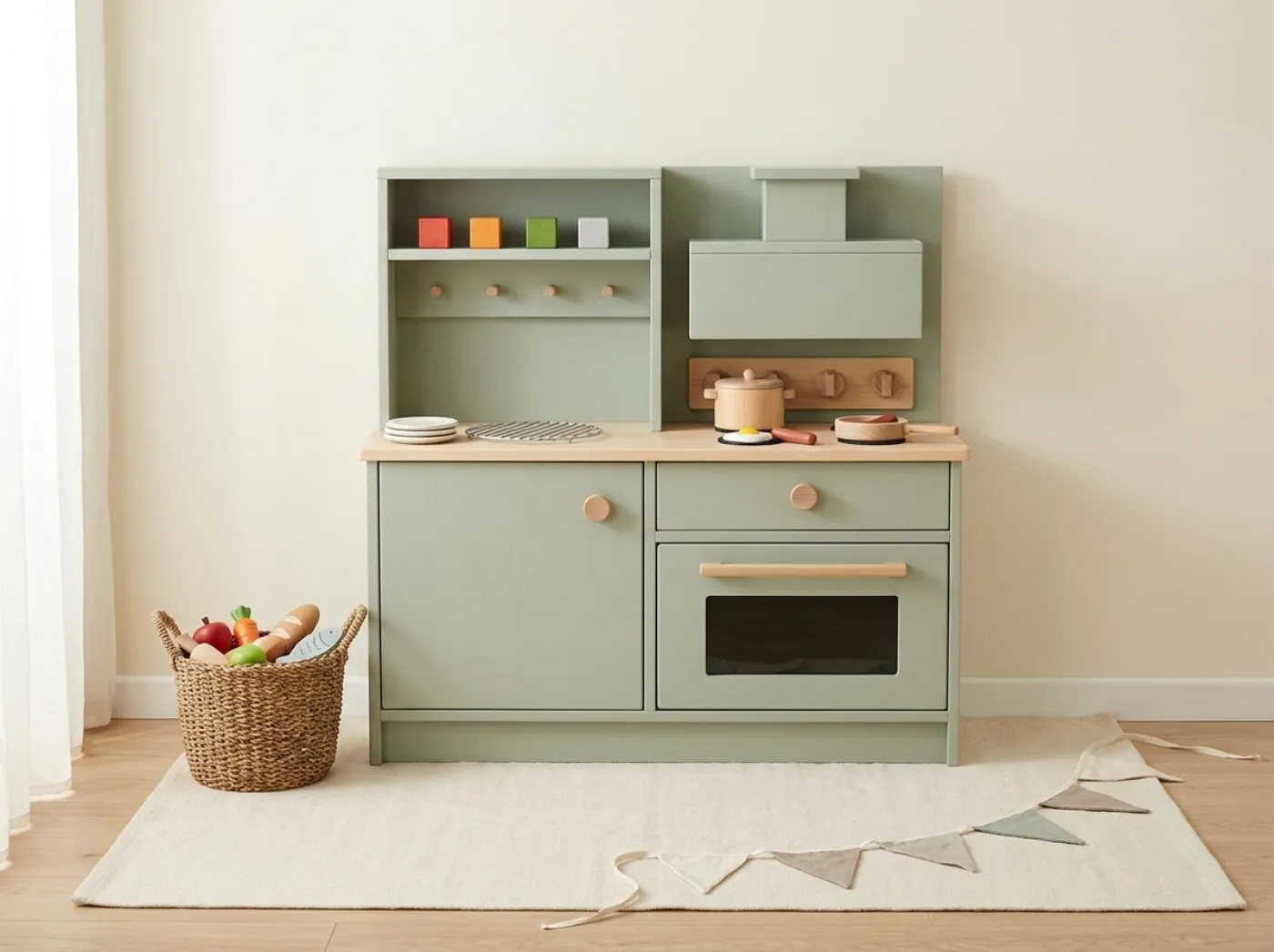
The Cottage Play Kitchen plans cover a painted wooden play kitchen made from two sheets of 3/4 in plywood and standard 1x boards, with rounded corners and no small parts. It is a different object than a desk, but it teaches the same skills you would use on one: plywood layout, edge banding, a smooth painted finish and wall anchoring. Materials for the standard size are estimated at about $340 to $490, and comparable finished play kitchens are listed around $349 to $599 in our plan research.
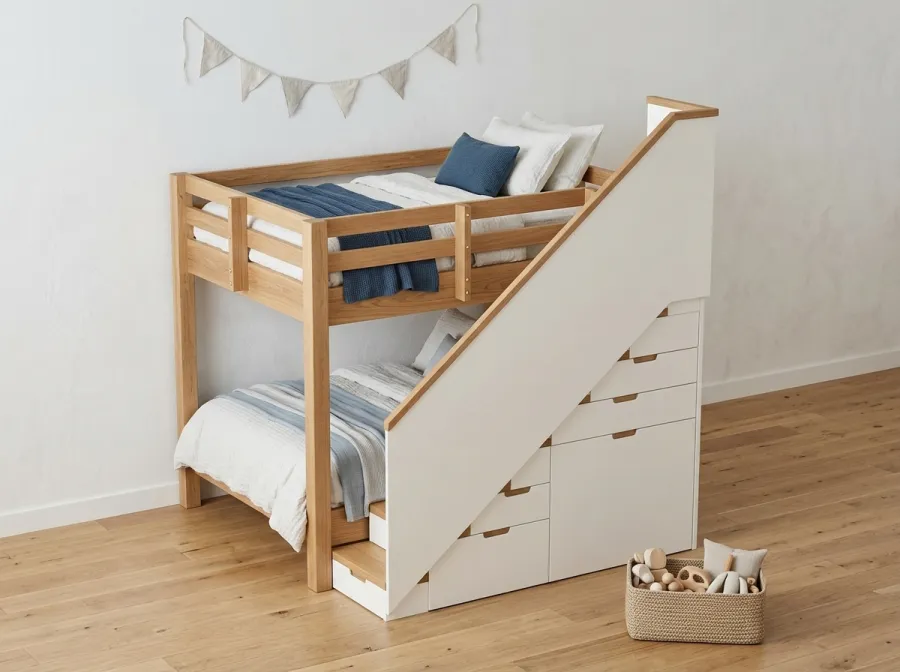
The Heirloom Bunk Bed plans cover a bed with a storage stair and drawers built into the risers. The drawer construction is the relevant part if you want to add storage to a child’s room. Materials for the twin over twin with ladder are estimated at about $410 to $590, and about $990 to $1,420 with the storage stair. Comparable finished bunk beds are listed around $1,199 to $1,749.
Both are generic DIY plans, not engineered drawings, and materials figures are planning estimates at typical home-center prices that vary by region. Each plan is a single purchase, and the cart takes 10 percent off when you buy two and 25 percent off when you buy three or more. The Complete Collection is $129.
Buy or build
Buy when you need a desk quickly, the child is already struggling with a homework spot, or you want the hutch and the chair in one box. A boxed set from the list above solves the problem for an afternoon of assembly.
Build when you have a specific wall, an awkward alcove or a strong view about the finish. A desk built from plywood and painted by hand can match a room better than any boxed set. The honest cost of building is time, and the first project is usually slower than you expect. If you have never built furniture, start with something simpler than a hutch.
Safety for a child’s desk
A few habits are worth the effort whatever you choose.
- Anchor the hutch. Tall or top-heavy furniture should be fixed to a wall stud with an anti-tip strap or bracket. Children climb.
- Round and sand. Ease sharp edges and corners, especially on a piece you finish yourself.
- Use finishes labeled safe for children’s furniture, and let paint cure fully before the desk goes into the room.
- Check the fasteners. Tighten screws and cam fittings after the first few weeks and each season.
A short checklist before you click
- Measure the space and the child, then decide on desk and chair height.
- Choose a set with a chair if you do not want to match one separately.
- Read the material line for solid wood versus engineered board.
- Look for a hutch layout that mixes open shelves with a closed bin or door.
- Confirm the age range and the weight capacity.
- Plan for wall anchoring if there is a hutch.
For more on the pieces around the desk, see our guides to Pottery Barn Kids dupes and the Pottery Barn Kids table and chairs dupe, and our wider look at how to find furniture dupes. If the piece you want is not covered by any plan, you can request a custom dupe.
DIYDupe is not affiliated with, endorsed by or sponsored by any retailer named here. Product names are used only to describe a style.