Pottery Barn Kids Dupe Dresser: Kendall Dresser Lookalikes for the Nursery
A Pottery Barn Kids dupe dresser and Kendall dresser dupe guide: six lookalike six-drawer dressers, what to check, anchoring tips, and related DIY builds.
A Pottery Barn Kids dupe dresser is a six-drawer, wide-top dresser with a calm, traditional face: square or lightly bracketed feet, simple pulls and a painted or soft wood finish. The Kendall dresser is one of the best-known catalog designs in this family, and it is a common search for parents setting up a nursery or a shared bedroom. This page gathers dressers that echo that look, explains what to compare, and points you to related DIY builds for the rest of the room. If you are looking for a Kendall dresser dupe, the main things to match are proportions, drawer front detail and finish.
We do not have a dresser plan in our collection, so this is an Amazon-led guide. The dressers below are lookalikes, and we describe them from their listings.
What the Kendall look is made of
Before you shop, it helps to name the design in plain terms.
- A deep, flat top. Nursery dressers are often used as a changing station. A flat top with a clean edge is the starting point of the look.
- Six equal drawers in two columns of three. Two drawer columns with a visible center divider, or two rows of wide drawers, depending on the model.
- A simple framed drawer front. A shallow raised or recessed panel, not elaborate carving.
- Short legs or a base with bracket feet. The dresser sits slightly above the floor, which makes vacuuming easier and softens the look.
- Soft, matte finish. White, gray, driftwood or a warm brown, finished without a heavy gloss.
- Understated hardware. Brushed nickel, antique brass or simple wood pulls.
If a dresser has those six traits, it will read as the same family, even if the details differ.
Pottery Barn Kids dupes on Amazon: dressers
We have not handled any of these, so every description comes from the listing. Check measurements, assembly notes and the safety wording before you order.
Delta Children Perry six-drawer dresser
The listing describes a six-drawer dresser in chestnut, with an interlocking drawer system that limits how many drawers open at once, along with an option to buy a changing-table topper separately. The classic framed drawer fronts are a fair visual nod to the traditional family. It is Greenguard Gold certified, according to the listing. Expect laminate or wood composite surfaces in place of fully solid wood.
Delta Children Essex six-drawer dresser in white and natural
A white-and-natural two-tone dresser with the same interlocking drawer system noted in the listing. The white body with a natural top is the color combination closest to a classic nursery look, and it fits a bright room. This is the one to look at if you want a two-tone dresser instead of a single painted color.
Delta Children Universal six-drawer dresser
The listing gives the assembled size as 47.25 inches wide, 20.75 inches deep and 34.75 inches tall, with a sleigh-style silhouette. The curve of the sleigh shape is a more decorative departure from the square Kendall look, but it is a classic nursery profile. The listing says it comes with a tip-over restraint to attach to the wall.
Storkcraft Horizon six-drawer dresser in driftwood
The listing describes a simple, modern design in a driftwood finish, made of wood composites and laminate, and Greenguard Gold certified. The plain drawer fronts make it a good quiet dupe for a room that already has a lot of pattern. It is more modern than traditional, so it suits a neutral nursery.
Storkcraft Brookside six-drawer dresser
The listing mentions sleek metal handles and bracket-style feet, which echo the bracket base in the traditional design. The bracket feet are the best match to the lifted look of the original family, and the metal pulls give a restrained finish. Look at the listing photos to judge the drawer front detail, which is flatter than a paneled front.
Storkcraft Casablanca six-drawer dresser
The listing describes wave details inspired by the French Riviera, in a driftwood finish. The wave carving makes it more decorative than a Kendall-style dresser, so it works for a more coastal nursery or a room with a sea theme. It is a deliberate step away from a plain copy.
Graco Noah six-drawer dresser
A driftwood six-drawer in the same family of nursery dressers, with Greenguard Gold certification noted in the listing. The finish and proportions are the draw here, and it can sit comfortably next to a crib or a bed. As with the others, expect a composite construction.
What to compare before you buy
A six-drawer dresser looks similar in every photo, so look at the things a photo hides.
- Construction. The listing should describe the material of the case, drawer boxes and back panel. Solid wood fronts with composite sides are common and fine, but know what you are buying.
- Drawer system. Interlocking drawers prevent more than one from opening at once, which reduces the chance of a child pulling the dresser forward. Look for that wording if tip-over is a concern.
- Tip-over restraint. Every dresser should include a wall anchor or a way to attach one. See the section below.
- Dimensions. Measure the wall, the doorway and the clearance for the drawers to open fully.
- Finish and certification. Look for notes about low-emission finishes and lead-safe paints, especially for a nursery.
- Assembly time. Most flat-pack dressers take a couple of hours with a helper.
Anchoring a dresser to the wall
Furniture tip-overs are a real hazard for small children, and a dresser is a common culprit because open drawers can act like a ladder. Anchor every dresser to a wall stud with the restraint kit supplied, or with hardware recommended by the maker. Do not place a television on top of a children’s dresser. Keep heavy items in the lower drawers and lighter clothing in the upper drawers.
Plastic wall anchors alone are not suitable for drywall holding a heavy piece. Find a stud, or use anchors rated for the load.
Where a dupe differs from the original
Be ready for these differences. Catalog dressers often use heavier case construction, more refined drawer glides and a hand-finished painted surface. Lookalikes are lighter and use laminates or composites, which is how they keep the cost down. For a nursery, where a dresser is used for several years and then moves to another room, a lighter piece is often entirely adequate.
Build the rest of the room
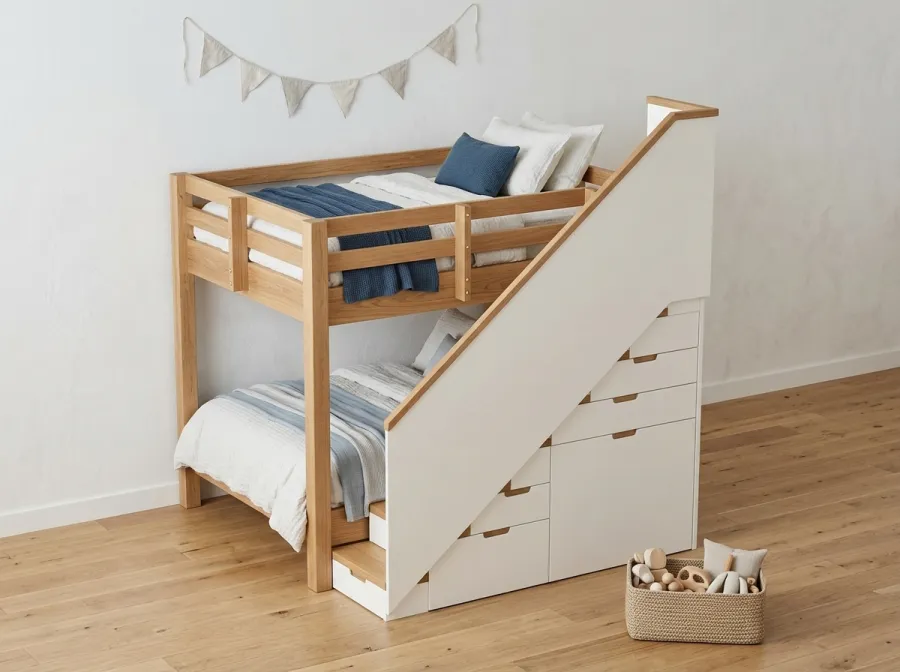
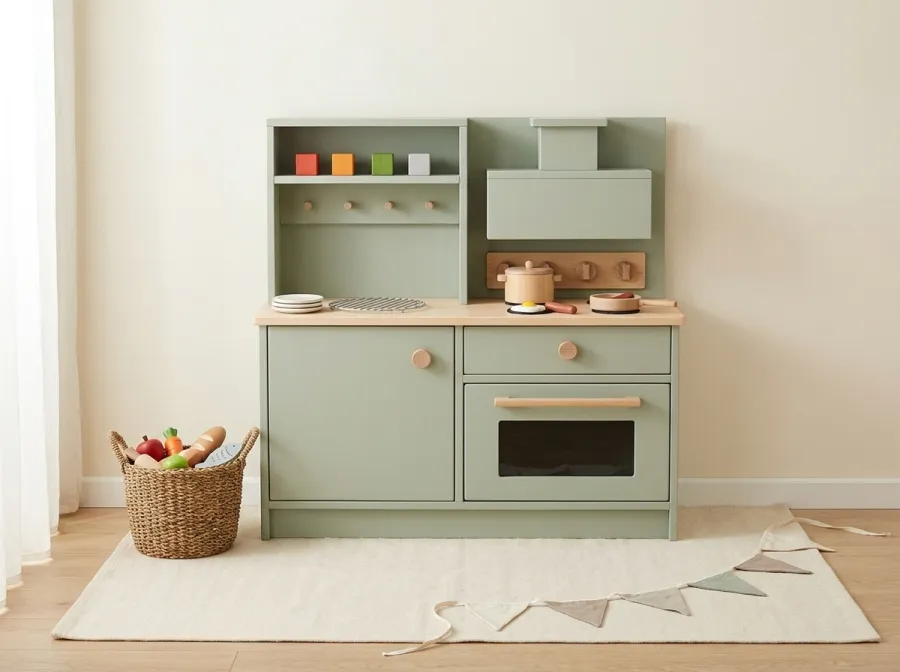
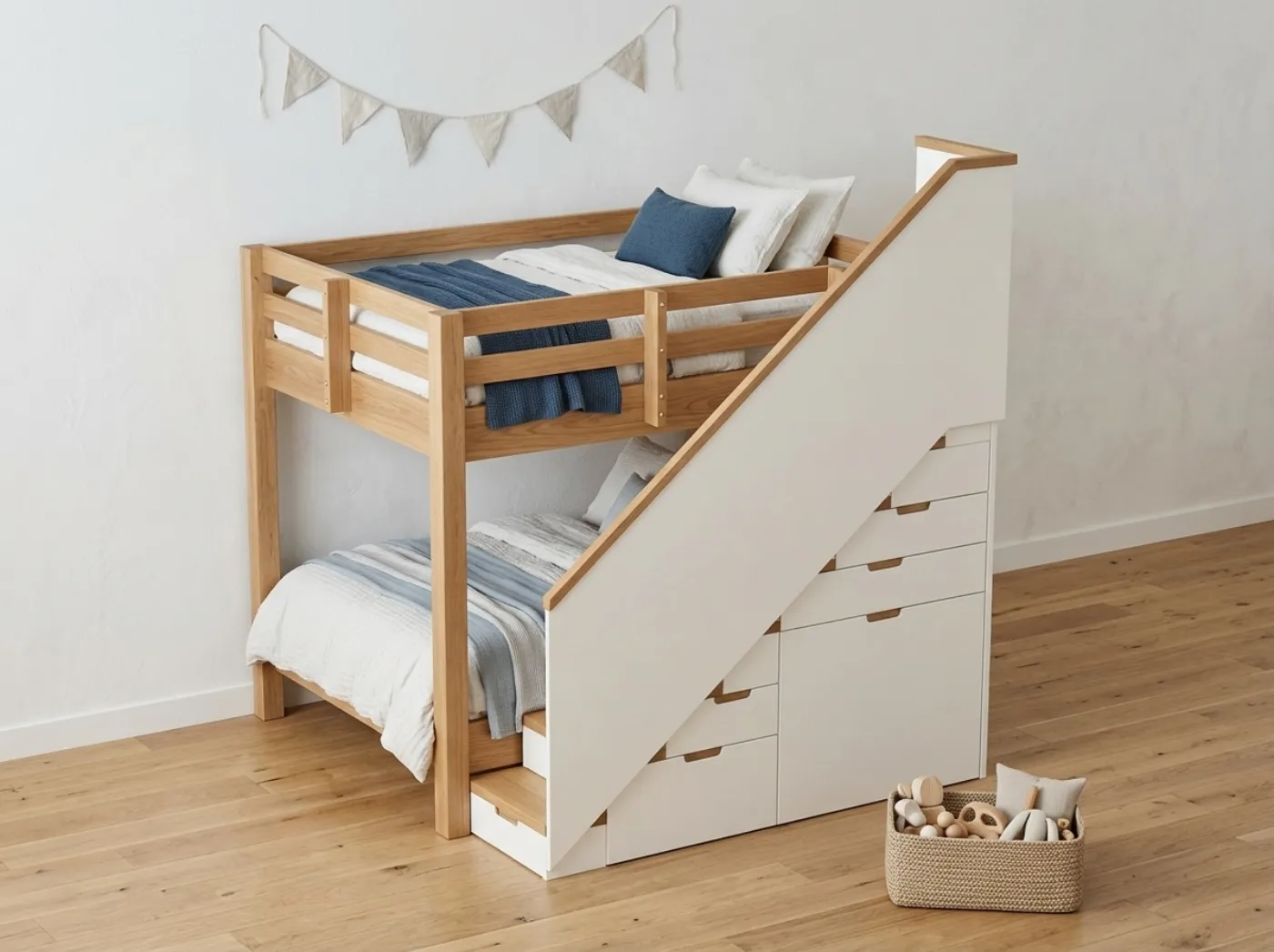
We do not have a dresser plan right now, but two of our builds go well with a dresser in a child’s room. The Heirloom Bunk Bed plans cover a solid wood bunk with a storage staircase, with materials of about $990 to $1,420 for the twin-over-twin storage-stair size and about $410 to $590 for the ladder version. Comparable finished bunks with storage stairs are priced around $1,199 to $1,749 in our plan research. The Cottage Play Kitchen plans cover a solid wood play kitchen with an oven door, sink and open shelves, with materials of about $340 to $490 against about $349 to $599 for comparable finished kitchens. Both are generic DIY plans, not engineered drawings.
Want a matching dresser built from plans? Request a custom dupe and tell us the style. The build-cost hub has the full set of estimates for what we do cover.
A note on pairing
If the dresser is white or driftwood, a natural wood bunk or play kitchen gives the room warmth. If the dresser is a dark brown, a white bunk lightens things up. Repeat one accent color across the room and let the furniture do the quiet work.
Making a dresser last past the nursery years
The best nursery dresser is the one that still works when the changing pad is gone. Choose a neutral finish and plain pulls, so it can move to a bigger child’s room, a guest room or an entry without looking out of place. Use drawer dividers or small bins so tiny clothes do not slide into a heap. Label the drawers by size or by season as the child grows. If the pulls feel flimsy, swapping them for sturdier ones is an easy upgrade, as long as the new screws match the original size. Finally, recheck the wall anchor after a move, because it is the part most often forgotten when furniture is shifted from one room to another.
DIYDupe is not affiliated with, endorsed by or sponsored by any retailer named here. Product names are used only to describe a style.