Best Wood for Outdoor Furniture: Cedar, Treated Pine, Redwood and More
Compare cedar, redwood, pressure-treated pine, cypress, white oak and teak for outdoor furniture, with notes on fasteners, ground contact and finish.
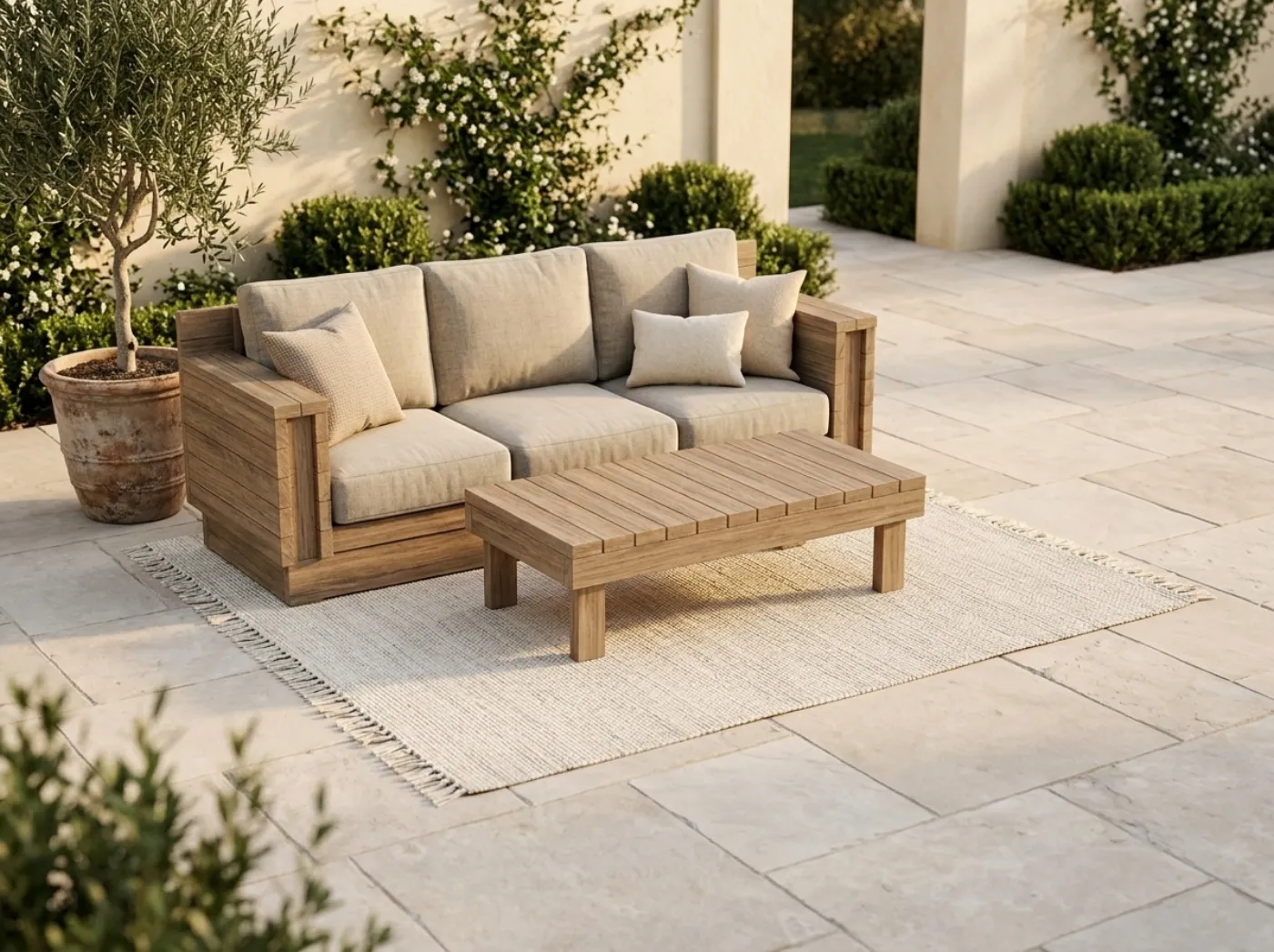
Picking wood for outdoor furniture is a balance between three things: how long the wood resists rot and insects, how it behaves under screws and a saw, and what it costs per board foot. No single species wins on all three. The right choice depends on whether the piece sits on a covered porch, a deck or bare soil, and whether you want to paint it, stain it or let it grey. This guide compares the common choices and explains how the three outdoor plans in the catalog handle the question.
What makes wood last outdoors
Wood rots when it stays wet and has oxygen, warmth and fungus present. Rot resistance comes from two sources: natural extractives in the heartwood of certain species, or preservative chemicals forced into the wood under pressure. There is an important distinction here. In species like cedar, redwood, cypress, white oak and teak, the decay resistance lives in the heartwood, the darker center of the tree. Sapwood, the pale outer band, has little protection in any species. When you buy a board marked heart or select, you are paying for more heartwood.
Pressure treatment is different. Preservative soaks into the whole board, including sapwood. Treated lumber carries a tag that states its use category. Boards rated for above-ground use are meant for decks, rails and furniture that stay clear of the soil. Boards rated for ground contact have a higher preservative load and are meant for posts and parts in contact with soil or water. Read the tag, because the two are not interchangeable.
Design matters as much as species. Furniture that sheds water, has gaps for drainage, sits on pads or a pad of gravel, and has sealed end grain will outlive furniture made of better wood that holds puddles.
Species compared
| Species | Rot resistance | Weight and hardness | Look | Cost tier | Notes |
|---|---|---|---|---|---|
| Western red cedar | Good in heartwood | Light and soft | Pinkish tan, silvers well | Moderate | Easy to cut; dents easily; common choice for chairs and benches |
| Redwood (heartwood) | Good | Light to medium | Red-brown, silvers | Moderate to high | Regional availability varies |
| Cypress | Good in heartwood | Medium | Pale tan | Moderate | Available mainly in the southern states |
| Pressure-treated southern pine | Good with treatment | Medium, heavy when wet | Green-tinted or brown | Low | Must dry before finishing; needs corrosion-resistant fasteners |
| White oak | Very good in heartwood | Heavy and hard | Pale tan | High | Closed pores, used in boats and barrels; hard on tools |
| Teak | Excellent | Heavy and oily | Golden, silvers | Very high | The benchmark; usually imported |
| Ipe and other dense tropical woods | Excellent | Very heavy, very hard | Dark brown | Very high | Needs carbide blades and pilot holes |
| Untreated pine, spruce or fir | Poor | Light to medium | Pale | Cheapest | For indoor use or fully painted, covered pieces only |
Red oak, often sold next to white oak, has open pores that wick water and is not suited to exposed outdoor use. Plain “whitewood” studs, sold as spruce-pine-fir, are meant for framing inside walls and will not last in rain and sun.
Treated pine: the practical default
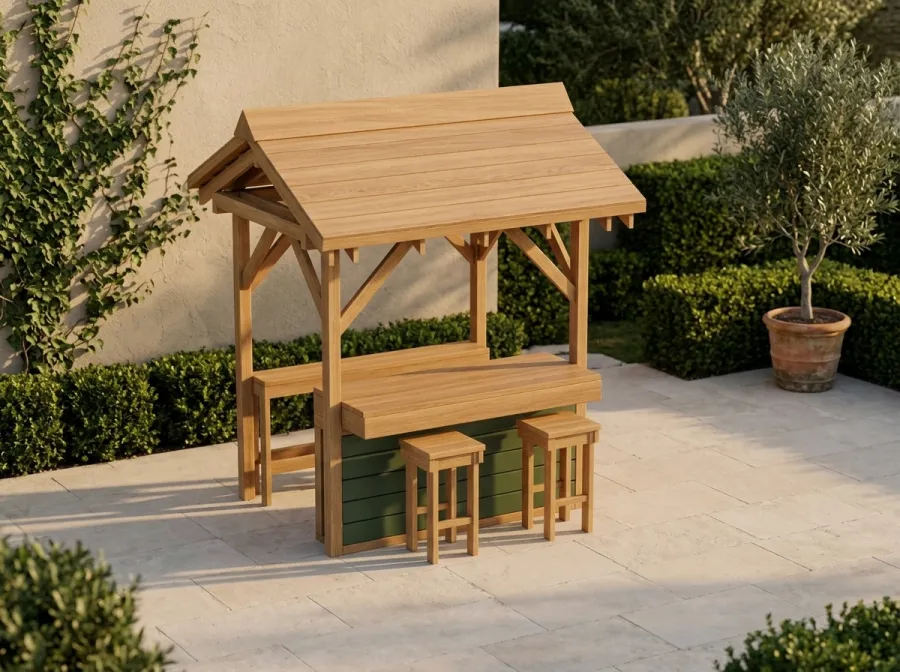
For most builders on a budget, pressure-treated pine is the workhorse. It is inexpensive, it is widely stocked, and it holds up well when the tag matches the use. The tiki bar plan, for example, uses pressure-treated 2x4, 2x6, 4x4 and 2x2 lumber rated for ground contact (UC4A) for its frame and posts, with exterior-grade cedar, redwood or above-ground treated 1x6 boards for the smooth skirt. That mixed approach is common and sensible: tougher, cheaper wood where the structure meets concrete, and a nicer face where hands and eyes land.
Treated lumber has a few quirks:
- Moisture. It often arrives wet and will shrink as it dries. Stack it flat with spacers for a few weeks before you finish it, and expect some checking (hairline splits) on the faces.
- Fasteners. Modern preservatives are corrosive to bare steel. Use stainless, or coated screws and bolts listed for treated wood, and hot-dip galvanized hardware in structural connections. Plain zinc and bright finish fasteners will corrode.
- Handling. Wear gloves when handling it, wear a dust mask when cutting, never burn scraps, and do not use it for cutting boards or surfaces that touch food directly.
- Finish. Wait until it is dry, then use a stain or sealer made for the purpose. Paint adheres best on dry, clean boards with a bonding primer.
Cedar and redwood: the comfortable choice
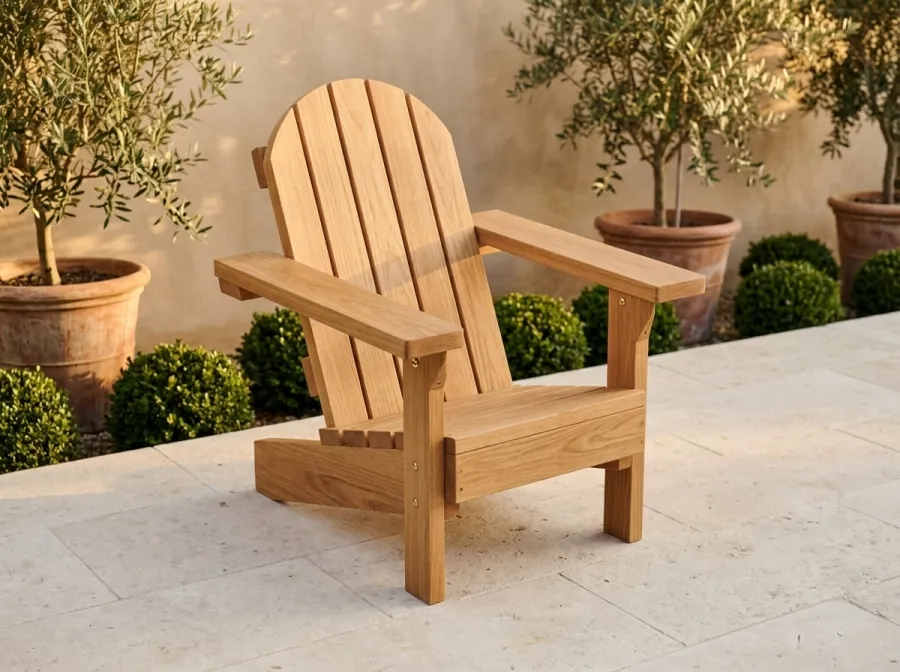
For pieces people touch and sit on, cedar and redwood are more pleasant. They are lighter, they are easier on the saw and drill, they smell good, and they silver into the teak-like patina many catalog designs rely on. The trade is softness, so edges dent and arms mark when someone drops a glass or drags a chair. They also cost more per board than treated pine, and good, clear heartwood is harder to find in big-box sizes than in lumberyards.
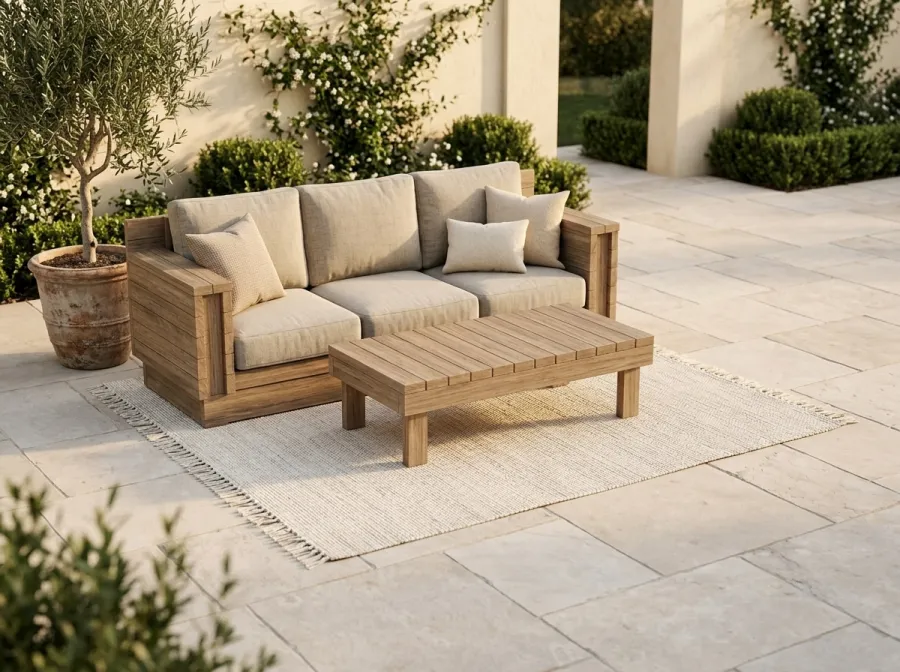
The outdoor sofa plan lists outdoor-rated lumber: cedar, redwood, or pressure-treated lumber rated for above-ground use. All three work for a piece that sits on a patio. For a sofa built entirely from 2x4 and 2x6 boards, the three-seat version calls for 11 boards of 2x4 and 2 boards of 2x6, so even a premium wood is a modest bill. The loveseat uses 9 boards of 2x4 and 2 boards of 2x6.
Picnic tables: pick for sitting and wetness
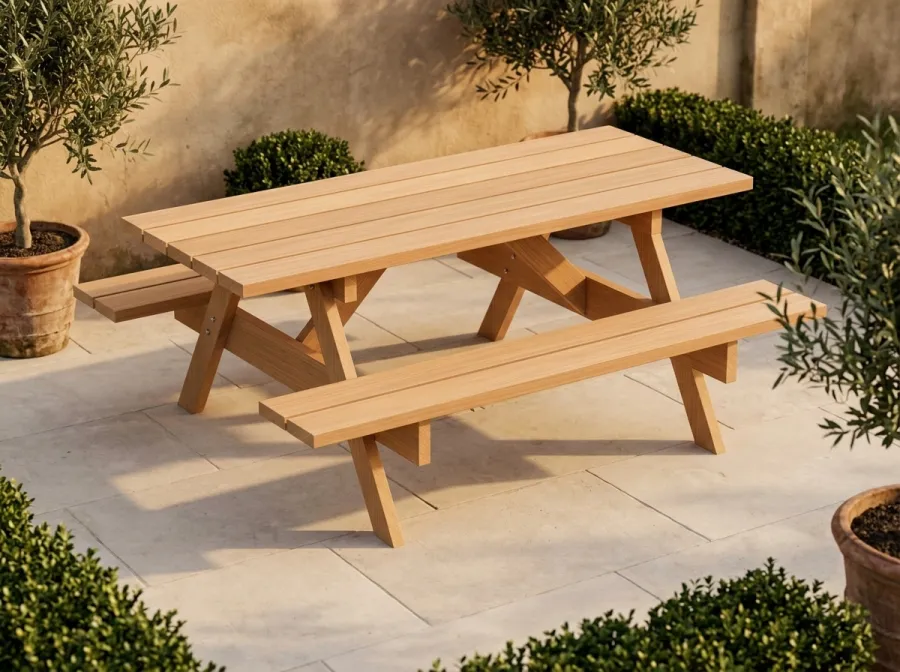
A picnic table lives in the worst conditions in the yard: horizontal surfaces collect water, people drop food and drinks, and the legs sit on grass. The picnic table plan describes a classic A-frame table in 6 ft, 8 ft and kids sizes, an octagon table, and a convertible bench, all with loads checked in outdoor, wet-service values. The 6 ft table lists 2x4 and 2x6 lumber, 22 sets of 3/8 in carriage bolts with washers and nuts rated for outdoor use, and exterior screws.
For a picnic table, treated pine is a very reasonable choice for the frame, because the legs are the part most likely to see ground moisture. If the table will be used for meals, many builders choose cedar for the tabletop and bench boards, since it is more comfortable on bare skin and less splintery, and since it does not carry the preservatives of treated wood. Whichever you choose, round the edges and pre-drill near board ends so they do not split.
Fasteners and hardware are part of the wood choice
Corroded steel is the most common reason outdoor furniture fails before the wood does. Match fasteners to the wood:
| Wood | Fastener choice | Why |
|---|---|---|
| Cedar and redwood | Stainless steel deck screws | Tannins stain and corrode lesser metals |
| Pressure-treated pine | Coated exterior screws rated for treated lumber or stainless | Preservatives attack bare steel |
| Structural connections | Hot-dip galvanized carriage bolts | Strong and corrosion resistant |
| Joints needing glue | Waterproof exterior wood glue | Water-resistant bond |
| Posts on a slab | Galvanized standoff post bases | Keep end grain off the concrete |
The tiki bar plan lists hot-dip galvanized standoff post bases, hot-dip galvanized carriage bolts and rafter ties, and an end-cut wood preservative to brush on every cut end of treated wood. It also calls for a level pad, either a 4 in concrete slab or 4 in of compacted gravel with pavers. This detail often matters more than the species of the post.
Seal every end
End grain absorbs water many times faster than a face. Whatever species you use, soak each cut end with sealer or a copper-based end-cut preservative, brushing it on until it stops absorbing. This is cheap insurance and should be done before assembly where possible, since screws and bolt holes open fresh end grain too. A wood end-cut preservative is made for this job. Wear gloves, work outside, and follow the label.
Practical buying tips
- Sort through the pile. Pick boards that are straight, with tight knots and no wane (bark edges). Avoid boards with deep checks near the ends.
- Buy a little extra. Outdoor lumber can have more waste from twists and splits than interior stock.
- Match the finish to the species. Treated pine needs time to dry. Cedar takes oil easily. A gloss varnish on any of them is a maintenance burden.
- Plan for expansion. Boards swell in rain and shrink in sun, so leave small gaps between deck-style slats rather than pushing them tight.
- Do not set legs in standing water. Adjustable glides or pads lift end grain off the ground.
A recommendation by project
| Project | Sensible wood | Reason |
|---|---|---|
| Lounge furniture on a porch or patio | Cedar or redwood | Comfortable, light, silvers well |
| Lounge furniture with a tight budget | Above-ground treated pine, fully dried and sealed | Low cost, long life if finished |
| Picnic table | Treated pine frame, cedar top optional | Ground moisture and heavy use |
| Backyard bar posts and framing | Ground-contact treated lumber (UC4A) | Structure meets a slab or pad |
| Bar top and skirt | Cedar, redwood or above-ground treated | Smooth finish and good touch |
Cost and availability
Prices change by region and season, so use the cost tiers in the table as a relative guide, not a quote. Treated pine is stocked almost everywhere. Cedar is common in the western states and in lumberyards that serve builders, and it can be special order elsewhere. Redwood is concentrated in the west. Cypress turns up more in the south. Teak and ipe usually come from specialty dealers. A sensible way to compare is to write out the cut list for the piece, count boards, and price the same list in two species. Because outdoor furniture is built from 2x4 and 2x6 boards, the difference between a budget species and a premium one is often a few boards, which makes a better wood affordable for a single chair or sofa even when it would be too much for a deck.
Questions to ask yourself before buying
- Will the piece sit on soil, gravel, a slab or a covered deck?
- Will you paint it, stain it, or let it grey?
- How often are you willing to refinish it?
- Will bare skin touch it, as on a bench or lounge chair?
- Is the budget for the whole project, including fasteners and finish?
Answer these honestly and the choice usually becomes clear: treated pine where moisture is constant, cedar or redwood where comfort and a natural patina matter, and a premium hardwood only where you want a piece to last for decades.
Where to go from here
The catalog look for outdoor sets is a clean, simple design in a durable wood, and the plans are written for standard lumber sizes that you can buy at any yard. See the plans for the Coastal Platform Sofa, the Long Table Picnic Set and the Backyard Bar for cut lists and shopping lists in your chosen wood, and the build cost guide to see how species choice shifts the total.