Outdoor Cushions for a DIY Sofa: Sizes, Foam, Fabric and Care
How to choose outdoor cushions for a DIY platform sofa: sizes, quick-dry foam, fabric types, cover fit, drainage, throw pillows and storage tips.
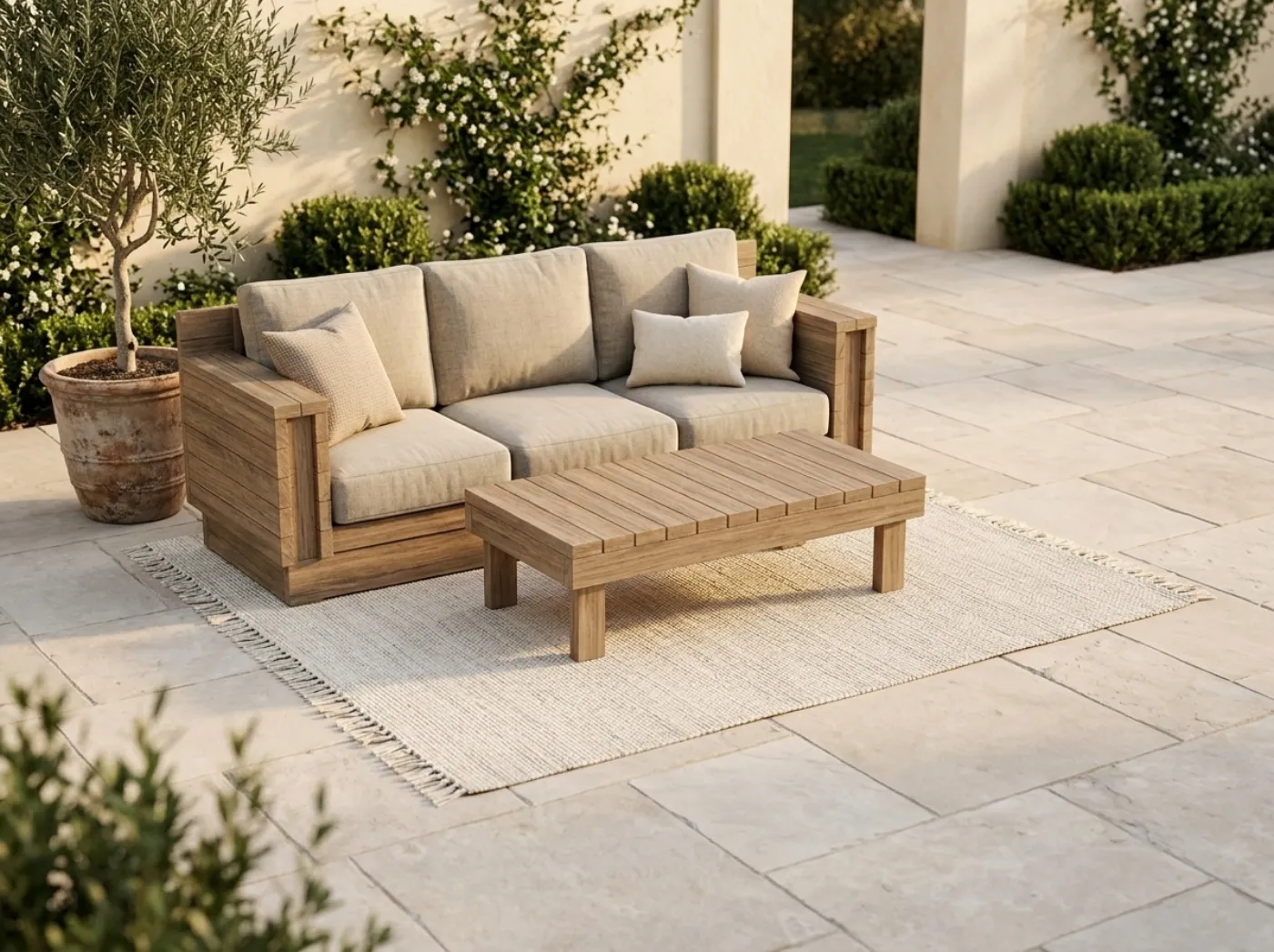
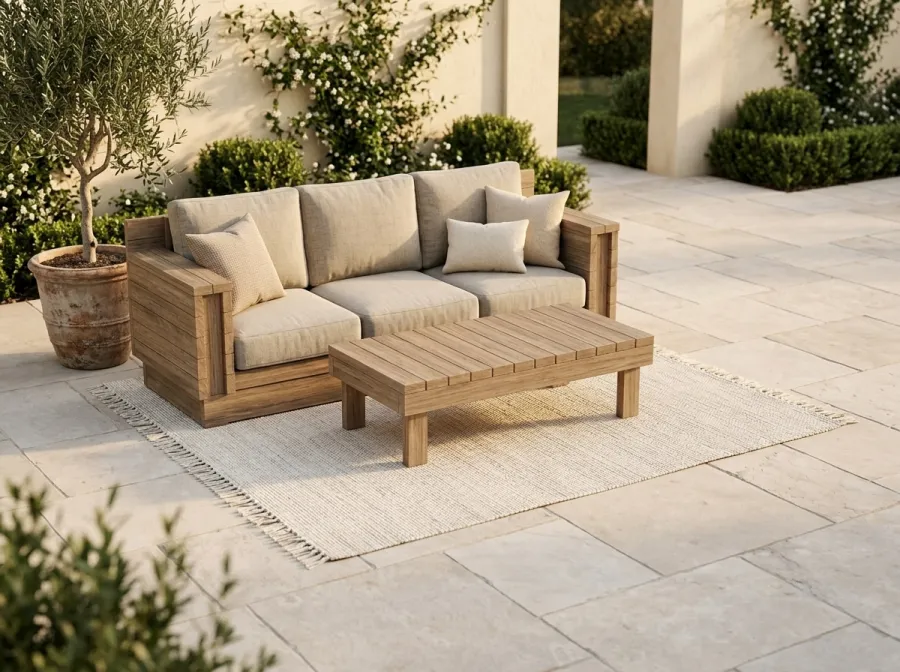
A wood platform sofa is a frame. The cushions make it a place to sit. In a catalog photo, the thick, squared-off seat cushions and the neat back cushions do much of the work of making the piece look expensive. They are also the part of an outdoor set that wears out first, so choosing them well affects how the sofa looks and feels over many seasons. This guide covers sizes, foam, fabric, covers and care for the kind of low, boxy sofa that the Coastal Platform Sofa builds.
Start with the frame’s cushion sizes
The most important thing about cushions for a DIY frame is that the frame is built around them. The Coastal Platform Sofa is sized for thick, deep standard cushions: 24 x 24 x 6 in seat cushions and 24 x 18 x 6 in back cushions, one of each per seat. Seat height is 15 in, the back is 30 in tall and depth is 29 in. That tells you exactly what to shop for, and it avoids the common trouble of custom sizes.
The plan’s materials lists count the cushions for each version:
| Version | Width | Seat cushions (24 x 24 x 6 in) | Back cushions (24 x 18 x 6 in) | Optional throw pillows (18 x 18 in) |
|---|---|---|---|---|
| 3-seat sofa | 7 ft 2 in | 3 | 3 | 2 |
| Loveseat | 5 ft 2 in | 2 | 2 | 2 |
| Lounge chair | 3 ft 2 in | 1 | 1 | optional |
| Armless middle module | 2 ft 2 in | 1 | 1 | optional |
The lounge chair and the armless module follow the plan’s “one of each per seat” rule. The module uses the same parts as the rest of the set, which lets you join several to make a longer run.
Measure the actual deck and back opening in your own build before ordering, since small variations in lumber and slat spacing can shift the dimensions. Standard sizes from several makers vary by an inch or so, so check the listed dimensions, not only the title.
Foam: what is inside
The filling decides comfort and drying speed more than the cover does. Common types:
| Foam or fill | Feel | Drying | Notes |
|---|---|---|---|
| Standard polyurethane foam | Firm to medium, resilient | Slow; holds water | Cheap and widely used; benefits from a water-resistant cover |
| Quick-dry (open-cell, reticulated) foam | Medium | Fast; drains and dries | Designed for rain and pools; typically costs more |
| Polyester fiberfill | Soft, loose | Moderate | Compresses over time; often used for back cushions |
| Foam wrapped in polyester batting | Plush, rounded | Slow | Comfortable look; the wrapping holds moisture |
For a platform sofa where the cushion sits on a flat deck, a firm foam core with a modest wrap keeps the squared-off look in the catalog photo. A 6 in thick seat cushion of medium-firm foam supports an upright seat. Back cushions can be softer, since they are not compressed in the same way. If you live somewhere rainy or humid, choose quick-dry foam for the seat, since a wet cushion can stay damp for days and develop mildew inside the cover.
Fabric and covers
Look for fabric made for outdoor use. The key properties are fade resistance, water resistance and breathability.
| Fabric type | Fade resistance | Water behavior | Notes |
|---|---|---|---|
| Solution-dyed acrylic | Very good; color is in the fiber | Water-resistant, dries quickly | Premium; soft, canvas-like feel |
| Solution-dyed polyester | Good | Water-resistant, dries quickly | Good value |
| Coated polyester | Moderate | Sheds water; coating can wear | Budget option |
| Cotton canvas | Fades faster | Absorbs water | Better for covered porches |
| Vinyl-coated fabric | Moderate | Waterproof but hot and sticky | Not very comfortable |
A removable cover with a zipper is worth the effort, because you can wash the cover without handling the foam. Look for covers with a lining or a drain hole or grommet, and with sewn seams that are double-stitched. Neutral shades such as natural, sand, light grey or navy make the wood stand out and hide wear, which also helps with the weathered, teak-style look many people want. You can find outdoor seat cushion covers and outdoor back cushion covers, or buy complete outdoor cushions 24 x 24 x 6 and match the sizes.
Ordering tips
- Confirm thickness. The plan assumes 6 in seat and back cushions. A 4 in cushion changes both the seat height and the sitting angle.
- Check whether size means the cover or the insert. A cover is often slightly smaller than the foam so that it fits tight. If you buy a cover and foam separately, match them carefully.
- Ask about the back cushion shape. Some are boxed, with a flat top, which is the catalog look. Others are tapered.
- Buy all cushions together, so the color dye lot matches.
- Look at the zipper placement. A back zipper keeps it out of sight.
- Check for ties or non-slip backing. Cushions on a smooth deck can creep forward. Ties at the back, or a non-slip rug pad cut to size, can keep them in place.
Throw pillows
The finishing touch in the plan is an 18 x 18 in outdoor throw pillow, two for the sofa or loveseat. Pillows add color and break up a single tone of fabric. Choose outdoor throw pillow covers 18 x 18 in a coordinating pattern, and use inserts rated for outdoor use. Because they are small, you can store them indoors during storms.
Make the frame cushion-friendly
Cushion care starts with the frame. A few design points help:
- Slats and gaps let water drain. Do not fill the deck gaps with caulk or caps.
- Raise the plinth. The plan includes felt or rubber pads under the base, so water does not pool under the wood.
- Sand the arm tops and the top edge of the back slats so they do not snag fabric.
- Seal the deck boards with an exterior finish, so tannins in cedar or redwood do not stain light covers in the rain.
- Keep screws flush or plugged. Exposed screw heads can wear holes in covers.
Tannin staining is a real issue with fresh cedar: rain can pull brown color from the wood onto pale fabric. Seal the frame, and consider a darker or patterned cushion for the first season.
Care and storage
Outdoor cushions last longer with a routine.
- Brush off dirt and debris regularly.
- Spot clean with mild soap and water and a soft brush. Rinse and let the cover dry fully in shade or sun.
- Stand cushions on edge after rain so that water drains from the foam.
- Check the care label, because some covers can be machine washed on a gentle cycle, and others should be hand cleaned.
- Do not put wet cushions in a sealed bin. Mildew grows in damp, closed spaces.
- Store them dry for winter, in a ventilated space, such as a garage or a shed. A breathable cushion storage bag or a deck box with vents works well.
- Use a cover on the sofa itself when the set is left outside for long periods. A waterproof patio furniture cover with vents keeps rain off while letting air circulate.
- Rotate and flip cushions to spread out wear and sun fading.
If a cushion does grow mildew, brush off the spores outdoors, wearing a mask, and clean it with a solution recommended on the care label. Fully dry it before putting it back.
Costs and tradeoffs
Cushions can be one of the larger single expenses on an outdoor set. Premium solution-dyed acrylic covers with quick-dry foam cost much more than basic polyester, and for a three-seat sofa you need six cushions plus optional pillows. Options to control cost include buying standard-size cushions from a regular supplier instead of custom-made, choosing a mid-tier polyester cover and replacing it in a few seasons, and keeping spare covers for the high-use positions. The plan includes a budget planner, and the build cost guide shows how cushions compare with lumber and finish.
Planning the layout
A three-seat sofa at 7 ft 2 in wide takes three seat cushions across, one per seat, and the same number of back cushions. If you want a longer seating run, the armless middle module at 2 ft 2 in uses the same parts and takes a single seat and back cushion of the same sizes, so extra cushions simply repeat the pattern. A lounge chair at 3 ft 2 in and a matching 48 x 24 x 14 in low slatted coffee table complete a conversation group on a patio. Decide on the arrangement first, count the cushions, and only then order.
Color and pattern
Because the wood is the main feature, keep the cushions quiet. Solid neutral fabrics let the grain and the weathered tone show. If you want pattern, put it on the throw pillows, where it is cheap to change. Match the pillow tones to the cushions or to nearby plants. Remember that dark fabrics absorb heat in full sun and can feel hot, while light fabrics show dirt sooner. A mid-tone, such as sand or soft grey, tends to be the practical compromise.
When to replace
Foam compresses with use. If a seat cushion no longer springs back, or you can feel the deck through it, replace the foam inside the cover instead of buying new covers. Covers that have faded unevenly or lost their water resistance are the usual reason to re-cover. A set of spare covers costs less than a full set of new cushions and lets you rotate while one set is being washed.
A short shopping checklist
- Seat cushions: 24 x 24 x 6 in, one per seat.
- Back cushions: 24 x 18 x 6 in, one per seat.
- Throw pillows: 18 x 18 in, optional, two for a sofa.
- Fabric: solution-dyed or another outdoor-rated type.
- Foam: firm or quick-dry for the seat.
- Cover care: a zipper, so the cover can come off for washing.
- Storage: a vented bag or deck box for the off season.
The catalog look
The reason a designer platform sofa looks expensive is proportion and polish: a low profile, flat arms, tight slats, and thick, squared cushions in a quiet color. Frame and cushions need to match. When you pair the Coastal Platform Sofa frame with 6 in cushions in the right sizes, you reproduce that proportion. The frame is built from 2x4 and 2x6 lumber, and the plan covers the cut list, shopping list and yearly check log. See the plan page for the full contents, or the complete collection if you plan to furnish a whole patio.